

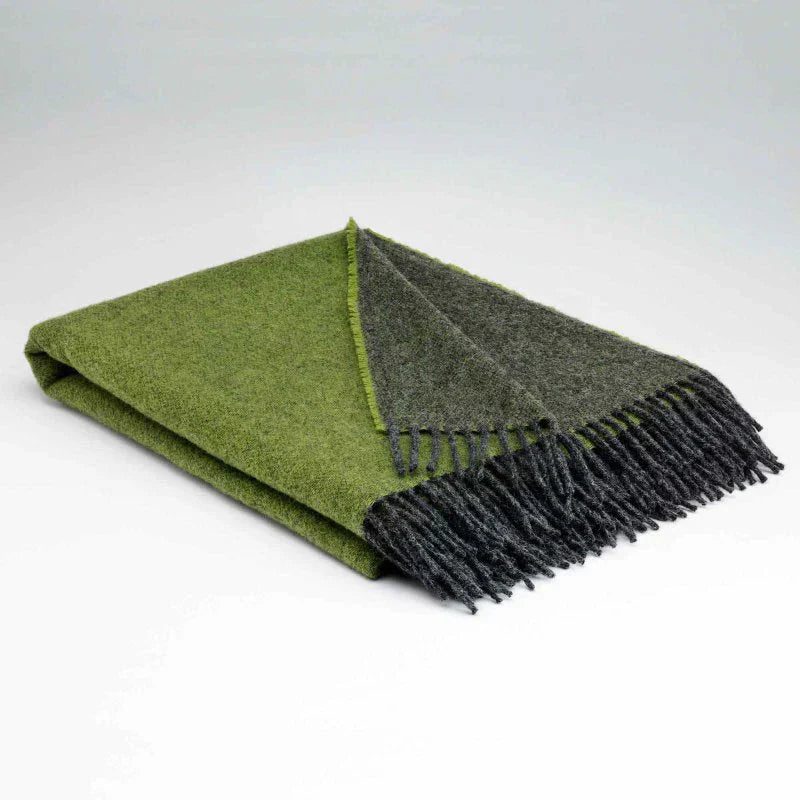
There's something special about holding a piece of fabric that was woven, not printed. You can feel it in the weight, the texture, the slight irregularities that prove it passed through human hands and not just a machine on a production line. McNutt of Donegal has been weaving exactly that kind of fabric on the Donegal coast since 1953. We've stocked their throws and scarves at Quinlan's for years and we wanted to properly introduce you to the family behind the mill and why their pieces have become some of our most-loved Irish gifts.

The Story Behind McNutt of Donegal
Bill McNutt didn't set out to build a textile company. He grew up around fabric, his parents ran a drapery shop in the coastal village of Downings, County Donegal and that early exposure gave him the idea to learn weaving himself. He taught himself the craft from scratch, then went on to train others in the local community, bringing employment to an area that needed it.
The business started small, on handlooms in a converted community hall in 1953. As demand grew, McNutt moved into a purpose-built mill fitted with power looms. That same mill, on Sheephaven Bay is still where the weaving happens today. The original weaving shed has since become their shop.
Over the decades, the mill built a reputation that reached well beyond Donegal. McNutt fabrics were used by major fashion names, including Irish designer Sybil Connolly and Japanese designer Kenzo. In the 1990s, the focus shifted to weaving Irish linen for large fashion houses. When the linen market went into decline after 2008 the family made the call to return to what they knew best.. wool. That decision shaped the McNutt of today.
The mill is now run by the third generation of the McNutt family, with Bill's son William continuing to lead the team. It's a genuine multi-generational story, a craft passed down rather than simply inherited.
What McNutt of Donegal Makes
McNutt's range has grown over seventy years but everything still comes back to natural fibre and considered colour.
- Throws and Blankets: Soft lambswool, merino, cashmere and alpaca blends. Designed to be used on the sofa or the bed.
- Scarves: Lightweight and warm in equal measure, woven in colourways that shift with the Donegal landscape from soft greys to deep heathers.
- Home Accessories: Cushions and smaller woven pieces that bring the same craftsmanship into everyday rooms.
- Fashion Accessories: Knee rugs and wearable pieces that carry the mill's tweed heritage into modern use.
Every item is designed, woven and finished at the mill in Downings. Nothing is outsourced. For people looking for an authentically Irish gift, that matters.

The Creative Process: From Donegal Wool to Your Home
McNutt's process blends traditional weaving techniques with modern equipment. The mill works almost entirely with natural fibres, lambswool, merino, cashmere and alpaca, chosen for both quality and longevity.
The colours are where the location really comes through. Standing in the mill, looking out over Sheephaven Bay and the Wild Atlantic Way, it's easy to see where the palette comes from: sea mist greys, heather purples, soft Atlantic blues. These aren't trend colours. They're the view from the window, translated into yarn.
What comes out the other end is fabric that's soft and light rather than heavy or scratchy, a world away from the coarser wool tweed people sometimes associate with traditional Irish weaving. It's built to be used for years, not seasons.
Why We Stock McNutt of Donegal at Quinlan's
We've worked with McNutt for a long time. Their products do exactly what we look for in Irish makers: genuinely made in Ireland, properly made to last, and carrying a story behind them.
Customer feedback bears this out. People buy a throw and come back for a scarf. They give McNutt pieces as wedding gifts, housewarming gifts or simply because someone deserves something that was made by hand, not assembled.
What we particularly value is that McNutt isn't trading on a vague idea of "Irish heritage." They're three generations into an actual weaving tradition, working from the same mill, with the same care, since 1953.

The Irish Connection
McNutt's work is rooted in a specific place. Downings sits on the Wild Atlantic Way, and that landscape shapes everything the mill produces; the colours, the textures, the feel of the place carried into the fabric. It's not Celtic branding stitched onto something made elsewhere. It's a Donegal mill, weaving Donegal wool, in the same building where it all began.
For Irish diaspora or visitors bringing something home, that distinction means something. A McNutt piece is a genuine piece of Donegal, not a souvenir version of one.
Supporting Irish Makers
When you buy McNutt of Donegal, you're supporting:
- A family-run mill based in County Donegal
- Traditional weaving techniques kept alive across three generations
- Local employment in a part of rural Ireland that has always relied on it
- Natural, durable materials over mass-produced fast fashion
- A genuine piece of Irish textile history, still being made today
In a market full of generic "Irish-inspired" homeware, McNutt represents the real thing: a family that has spent seventy years weaving wool into something worth keeping.
Shop McNutt of Donegal at Quinlan's
Woven in Donegal. Built on three generations of craft. Made to last well beyond the season it was bought in.
Browse our McNutt of Donegal collection →
Frequently Asked Questions
Where is McNutt of Donegal made? Every McNutt piece is designed, woven and finished at their mill in Downings, County Donegal. The mill has operated from the same village since 1953.
What materials does McNutt of Donegal use? McNutt works with natural fibres including lambswool, merino, cashmere and alpaca, chosen for softness, warmth and durability.
What makes McNutt of Donegal pieces special? Each piece is woven by a family business now in its third generation, using colours and patterns drawn directly from the Donegal landscape. The mill has supplied fashion houses including Sybil Connolly and Kenzo, and continues to weave entirely in-house rather than outsourcing production.

Leave a comment
All comments are moderated before being published.
This site is protected by hCaptcha and the hCaptcha Privacy Policy and Terms of Service apply.